
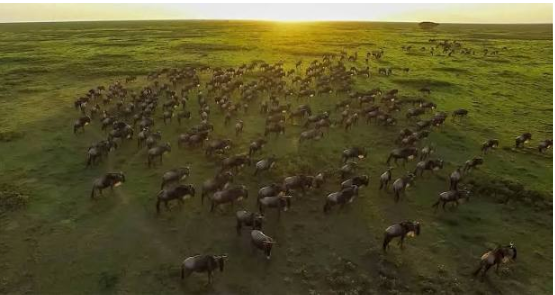

Every year, well over a million animals complete one of the greatest movements of life on Earth. Wildebeest, zebras, and gazelles pour across the plains of northern Tanzania and southern Kenya in a vast, restless circuit, driven by rain, grass, and instinct. Lions follow, crocodiles wait, vultures circle, and the entire ecosystem rearranges itself around the herds.
The Serengeti Great Migration is often described as a single event, a date on a calendar you either catch or miss. In truth, it is a continuous, year-round cycle with no true beginning or end. Understanding how it works makes it far easier to plan a trip, choose the right location, and appreciate what you are seeing. This guide explains the science behind the migration, follows the cycle through the year, and offers practical advice for witnessing it responsibly.
What Is the Great Migration?
The Great Migration is the circular movement of roughly 1.5 million wildebeest, accompanied by hundreds of thousands of zebras and gazelles, through the Serengeti ecosystem. The route covers hundreds of kilometers, passing through Tanzania’s Serengeti National Park and Ngorongoro Conservation Area and crossing into Kenya’s Maasai Mara, before looping back again.
Several points are worth understanding from the start.
It is a cycle, not an event. The herds are always moving somewhere, so there is no single “migration season.” The right question is not whether the migration is happening, but where it is happening.
It is not a single herd. The animals travel in many groups spread across vast distances, sometimes thinly scattered and sometimes gathered in enormous concentrations.
It is driven by food and water. The herds follow rainfall and the fresh grass that follows, not a fixed schedule, so timing varies from year to year.
It is not entirely predictable. Even experienced guides cannot promise exactly where the herds will be on a given day. Good planning improves your odds, but it does not guarantee a particular scene.
Why Do the Animals Migrate?
The reason is simple: survival. The Serengeti ecosystem has uneven rainfall and varied soils, and the herds move to find the best grazing and water.
Nutrient-rich short grass. The southern plains grow short grass on volcanic soils rich in minerals that benefit pregnant and nursing mothers. This is why the herds gather there to give birth.
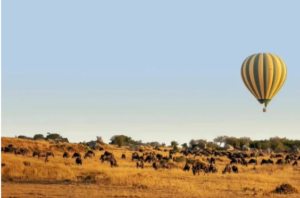
Water and long grass. As the dry season advances, the southern plains dry out, and the herds move toward the wetter north and west, where taller grass and permanent water remain.
Responding to rain. The movement follows localized rainfall rather than a calendar, which is why timing changes from year to year.
Safety in numbers. Moving in huge groups helps individual animals reduce their chances of being picked off by predators.
The Migration Through the Year
Think of the migration as a loop. Here is how the cycle generally unfolds, with the caveat that weather shifts timing by weeks.
January to March: The Southern Plains and Calving
The herds gather on the short-grass plains of the southern Serengeti and the Ndutu area. This is calving season, when a vast number of calves are born within a few weeks. Babies are on their feet within minutes, and the sheer number of newborns draws lions, cheetahs, and hyenas in force. Predator action is intense, and the plains feel alive with activity.
April to May: Heading North
As the rains end and the grass fades, the herds start moving north and west through the central Serengeti. The long rains bring lush scenery, dramatic skies, and fewer visitors. Wildlife is still excellent, and some camps offer lower rates.
June to July: The Western Corridor and the Grumeti
The animals approach the Grumeti River in the western corridor, where large crocodiles lie in wait at crossing points. River crossings here can be dramatic, though they are less consistent than those on the Mara River and are not guaranteed.
July to October: The North and the Mara River
The herds reach the northern Serengeti and the Mara River, often crossing into the Maasai Mara in Kenya and sometimes back again. These are the famous river crossings that appear in documentaries, with thousands of animals plunging into the water in a mixture of panic and determination. Timing is fickle. Herds may gather at the bank for days, hesitate, retreat, then suddenly cross in a rush.
November to December: Returning South
The short rains draw the herds back south through the eastern Serengeti and the Lobo area, and the cycle prepares to begin again.
The Drama of the River Crossings
River crossings are the most celebrated spectacle of the migration, but they are also widely misunderstood.
They are not scheduled. There is no way to guarantee a crossing on a specific day. The herds may spend days at the edge before something triggers them.
They are risky for the animals. Crocodiles, strong currents, steep banks, and the crush of the crowd all cause deaths, though most animals cross successfully.
Patience is rewarded. Guides often position vehicles at likely crossing points and wait for hours. Some visitors see multiple crossings, while others see none, even in peak season.
Behavior matters. Responsible guides keep vehicles at a respectful distance, avoid blocking the herds’ path, and never try to provoke a crossing. Choose operators who follow park rules.
Crossings are only one part of the migration. Many travelers find that the calving season, the vast gatherings of herds on the plains, and the predator activity that surrounds them are just as memorable.
The Predators and the Wider Ecosystem
The migration shapes life across the Serengeti.
- Lions follow the herds and hunt wildebeest and zebra, with prides concentrated in areas where prey is abundant.
- Cheetahs use the open plains and calving season to hunt young animals.
- Spotted hyenas are highly effective hunters and scavengers, and their clans often locate near the herds.
- Leopards hunt along rivers and wooded areas, targeting a wide range of prey.
- Crocodiles wait at river crossings, and the largest can take down adult wildebeest.
- Vultures and other scavengers clean up the remains, completing the cycle.
The migration also fertilizes the land, shapes the grassland through grazing, and supports a web of species that depend on its movement.
Where to Stay to See the Migration
Your base determines how close you are to the herds.
Mobile camps move seasonally, positioning themselves in the right region as the herds travel. They offer an immersive experience with a classic expedition feel, often with comfortable beds and good food.
Permanent lodges and tented camps stay in one location. Choose carefully, and match the camp’s region to the part of the cycle you hope to see.
Move around if you can. If your trip is long enough, splitting your stay between two regions improves your chances of encountering the herds.
Think about location, not just comfort. A camp in the right area saves hours of driving each day, which means more time with the wildlife.
Tips for Witnessing the Migration
- Decide what you most want to see. Calving, river crossings, or general herd gatherings each point to different months and regions.
- Stay flexible. Nature does not follow a schedule, so allow room to adapt.
- Spend enough time. Four or more nights in the Serengeti gives a better chance of strong sightings than a quick overnight.
- Hire an experienced guide. Good guides read the weather, track the herds, and know how to position the vehicle.
- Book early for peak months. Camps near the herds fill quickly, especially from July to September.
- Prepare for early starts. The best light and activity often occur at dawn and dusk.
- Bring good optics. Binoculars and a camera with a decent zoom improve every sighting.
- Respect the wildlife. Keep your voice low, stay in the vehicle, and follow park rules.
- Check health and entry requirements. Confirm visa rules, vaccinations, malaria precautions, and any yellow fever certificate requirements for your route.
Common Misconceptions
“There is one best month.” There is no single best time. Each period offers something different, from calving to river crossings to quiet green-season landscapes.
“The migration only happens in the northern Serengeti.” It happens across the whole ecosystem, all year.
“If I miss the crossings, I miss the migration.” Calving, predator action, and enormous herd gatherings are spectacular without a river crossing.
“The herds follow a fixed route on fixed dates.” The cycle is consistent, but timing and routes shift with rainfall.
Conclusion
The Serengeti Great Migration is not a one-day spectacle but a living cycle that shapes an entire ecosystem. By understanding why the herds move, where they are likely to be in each season, and how nature’s unpredictability affects timing, you can plan a trip that fits your priorities. Choose a camp in the right region, give yourself enough days, work with an experienced guide, and stay flexible. Whether you witness newborn calves on the southern plains or thousands of animals crossing a river, the scale of the migration is something that stays with you long after you leave.
Key Takeaways
- The Great Migration is a year-round circular movement of roughly 1.5 million wildebeest plus zebras and gazelles.
- The herds follow rainfall and fresh grass, so timing varies from year to year.
- January to March suits calving on the southern plains, while July to October is the main window for northern river crossings.
- River crossings are unpredictable and cannot be guaranteed on any given day.
- Predators, scavengers, and the wider ecosystem make the migration far more than wildebeest alone.
- Camp location, trip length, and guide quality strongly influence what you see.
- Stay flexible, book early for peak months, and follow park rules to protect the wildlife.
Frequently Asked Questions
- What is the Serengeti Great Migration? It is the year-round circular movement of roughly 1.5 million wildebeest, along with zebras and gazelles, through the Serengeti ecosystem in Tanzania and into Kenya’s Maasai Mara.
- When is the best time to see the Great Migration? It depends on what you want to see. January to March suits calving in the south, and July to October is the main window for river crossings in the north.
- When do the river crossings happen? Mara River crossings generally occur from around July to October, while Grumeti River crossings may occur earlier, around June to July. Timing varies with rainfall and is never guaranteed.
- Can I see the migration all year? Yes. The herds are always somewhere in the ecosystem, so the question is where, not whether. A good guide can help you find them.
- Why do wildebeest migrate? They follow rain and fresh grass in search of food and water, which varies across the Serengeti through the year.
- Where is the migration in January and February? Usually on the southern Serengeti and Ndutu plains, where calving takes place.
- How long should I stay to see the migration? Four or more nights in the Serengeti improves your chances, and splitting your stay between regions helps further.
- Is the migration worth seeing outside of river-crossing season? Absolutely. Calving season, huge herd gatherings, and intense predator activity are spectacular, and the green season offers quieter landscapes.
- Do I need to book far in advance? For July to September and for camps near the herds, book six to twelve months ahead. Other periods are easier, but good camps still fill up.
- How can I watch the migration responsibly? Choose operators who follow park rules, keep a respectful distance, never pressure the animals, and support conservation and local communities.